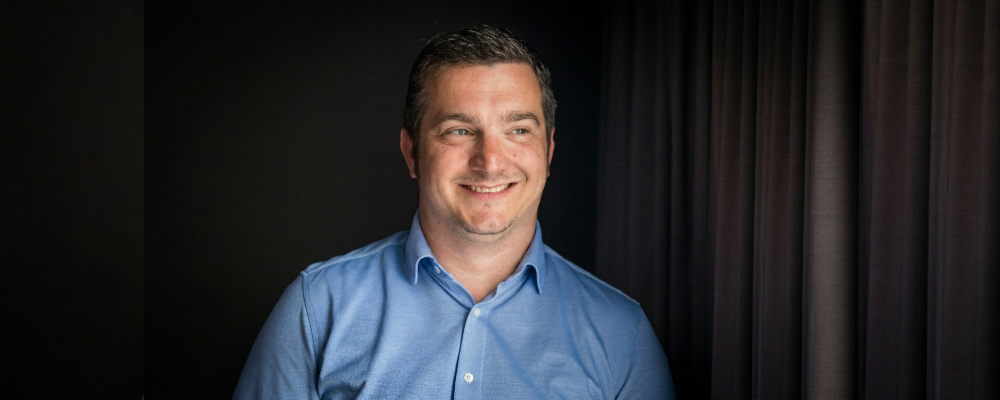
Revenue management as a compass: the strategy of Dave Overeem van Elferen at Inntel Hotels
Over the past twenty years, Dave Overeem van Elferen has built a broad career in the hospitality industry, combining operational experience with commercial strategy. He started on the hotel floor, working in front office and operations, and progressed through various roles to his current position at Inntel Hotels, where he is responsible for revenue management.
What defines his approach is his broad perspective on the field. For Dave, revenue management is not just about adjusting prices, but about finding the right balance between guest, brand and results. His operational background helps him understand how pricing and distribution decisions directly impact teams on the floor as well as the guest experience.
In a sector that is constantly evolving due to technology, market dynamics and changing guest expectations, he sees revenue management increasingly as a strategic discipline. Data and systems play an important role, but ultimately it still comes down to human interpretation, collaboration and making deliberate choices.
From reception to revenue: where it started for me
I started in front office and operations. My first real reception role was at Inntel Hotels, alongside my studies at hotel school. I worked there during my studies and stayed on for a while after graduating.
After that, I worked elsewhere for a period, but eventually returned to Inntel. In those early years, my focus was mainly on guest interaction and operational processes. That turned out to be a valuable foundation.
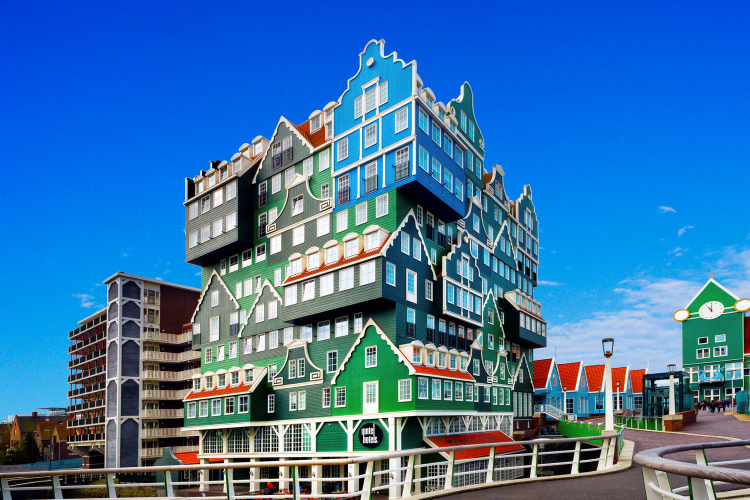
My real connection with revenue management began when I worked at The College Hotel. At that time, revenue management was barely covered at hotel school. In the hotel, I was responsible for front office, reservations and revenue management.
That is where I discovered how interesting this field really is. Revenue management is not just about numbers. It is about behaviour, timing and decision making. Why do guests book when they do? What happens when you adjust prices? How do different target groups respond?
What appealed to me most was that you often see the impact of decisions quite quickly. You can adjust a strategy and fairly quickly see what it does to demand, occupancy and revenue.
I also noticed that my operational background helped me. Because I have worked at the front desk myself, I understand what decisions made in the office mean for people on the floor. That allows me to explain revenue management more effectively to teams that are mainly focused on service and guest experience.
Mentors who shaped my perspective
Looking back on my career, there are two people who had a strong influence on how I view hospitality and leadership. The first is Hans Vugts, who was General Manager of the Barbizon Palace at the time. I once started there as an intern in administration, where I worked on income audits among other things. The hotel made a big impression on me, but especially the way it was managed.
What I learned from him is how important calmness and overview are when managing a large hotel. He projected a sense of calm, while behind the scenes there was of course a lot going on. That kind of leadership stays with you.
The second person is Willem Bleuland van Oort, who was General Manager of Hotel Arena at the time. I worked there as a revenue manager. What I learned there still shapes how I look at revenue management today. I was given a lot of freedom to try things, but there was always guidance and feedback. That is a strong combination: room to experiment, but also someone who helps you sharpen your thinking.
Hotel Arena was also an independent hotel, which meant we were not tied to a large chain structure. That allowed us to test new ideas and adjust strategies more quickly. That experience later helped me to keep thinking entrepreneurially, even within larger organisations.
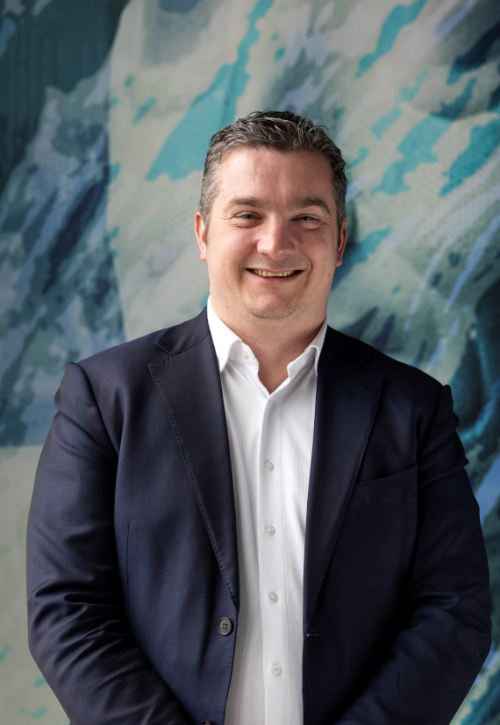
Why hospitality still fascinates me after more than twenty years
I actually knew quite early on that I wanted to work in hospitality. When I was about five years old, I was already fascinated by hotels. At that time, I thought I wanted to do something in restaurants. I imagined myself serving my parents with a cloth over my arm. What has always appealed to me is the idea that people come to a hotel for an experience. Whether it is a business trip, a weekend away or an event, a hotel plays a role in that moment.
And honestly, that energy has never disappeared. Hospitality is constantly evolving. The market changes, technology develops and guest behaviour shifts. That means you constantly have to ask yourself: how do we position our hotels? What choices do we make? How do we remain relevant for our guests? That dynamic keeps the work interesting.
The right guest at the right time
For me, revenue management and guest experience do not oppose each other. They reinforce each other. A hotel that is completely full at any price is not automatically successful. It is about having the right guest at the right time at the right price in your hotel.
The right guest is someone who fits the character of your hotel. Someone who aligns with what you want to represent as a brand. That is why it is important that different departments work closely together, such as marketing, sales, operations and revenue.
If marketing chooses a certain positioning, but the pricing strategy tells a different story, a mismatch occurs. Guests then get a different impression than what you actually want to convey. At Inntel Hotels, we try to align these elements as closely as possible.
Each hotel requires its own strategy
What I find interesting about Inntel Hotels is that we do not follow a standard formula. Each hotel has its own identity and target audience. That also means the revenue strategy differs per hotel. Sometimes you focus more on volume, for example when that suits the location or market demand. In other cases, you focus more on guests who are willing to pay more for a specific experience.
We also deal with different segments, such as business guests, leisure guests, events and groups. Finding the right balance between these segments is an important part of revenue management.
Measuring success: numbers and context
A revenue strategy is successful to me when both the numbers and the context are right. RevPAR is an important KPI, but it does not tell the full story. You can have a rising index while guest satisfaction declines or returning guests visit less often. You might win in the short term, but it can cause damage in the long term.
That is why I always look at multiple indicators at the same time. For example, RevPAR, direct bookings, average length of stay and guest satisfaction (NPS score).

There is also one KPI that I believe is still underestimated: cost of acquisition. These are the costs you incur to secure a booking, such as OTA commissions, marketing costs or other distribution expenses. High revenue says little if a large portion of it goes to commissions.
That is why I encourage my team to think in terms of net revenue instead of just gross revenue. It immediately changes the conversation. A direct booking of €180 can ultimately be more valuable than a €200 booking through an expensive distribution channel.
A difficult decision: a hotel buyout
Some decisions in revenue management are relatively small, such as adjusting prices. But there are also decisions with much greater impact on the hotel. One example is whether to offer a hotel as a full buyout.
Many people think this is a simple decision: all rooms sold and therefore guaranteed revenue. But in reality, you have to look more broadly. The price needs to cover not only room revenue, but also income from meetings, events and food and beverage.
A buyout also changes the dynamics of a hotel. Normally, there is a continuous flow of guests checking in and out. With a buyout, the hotel can suddenly be empty afterwards, and you have to rebuild occupancy again. That is why price and timing are crucial in such situations.
In the case we dealt with, we ultimately chose the buyout at a good price. My goal was not to maximise every last euro, but to achieve a healthy margin.
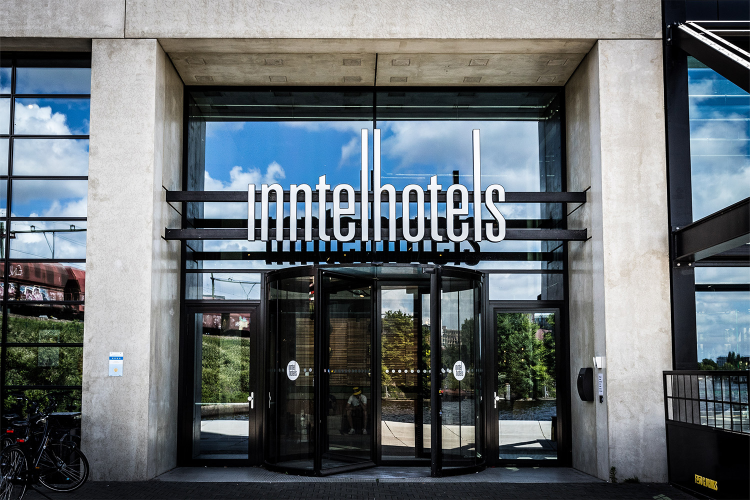
The biggest misconception about revenue management
One of the biggest misconceptions about revenue management is that it is only about pricing, as if the role is limited to increasing or decreasing rates. In reality, pricing is just one part of the whole. Modern revenue management is about optimising value per guest, per channel and per moment. It already starts with the choice of distribution channels.
Online travel agencies may seem attractive because of their reach, but they come with commissions.
Direct bookings often help build a stronger relationship with the guest. That is why revenue management today goes far beyond pricing strategy alone.
The role of AI in revenue management
Technology plays an increasingly important role in our field. AI has not replaced my work, but it has changed it. Where we used to spend a lot of time on manual analysis, technology can now process large amounts of data much faster. This allows us to identify trends and patterns that were previously harder to detect.
As a result, my role is shifting more towards strategy. It is less about analysing numbers and more about interpreting data and making decisions.
At the same time, human insight remains essential. Hospitality data is often not perfect. If data is incomplete or inaccurate, systems can draw incorrect conclusions. As a revenue manager, you need to judge when to follow the system and when to intervene.
We work with Duetto as our revenue management system, which uses machine learning. In addition, we use tools such as Microsoft Copilot to analyse data and identify trends, and task optimisation tools to improve efficiency.
The future of revenue management
If you ask me what the field will look like in ten years, the title will likely remain, but the content will shift. Analysis, rate updates and reporting will become more automated. Revenue management will become more strategic.
I see the revenue manager increasingly as a commercial strategist, rather than a data analyst. The difference lies in what AI cannot do: communicate, tell a story and explain what data actually means. Data only has value if you can translate it into a story that a general manager, owner, commercial team and receptionist can understand.
Why Inntel Hotels suits me
What I appreciate about Inntel Hotels is that each hotel has its own character. At the same time, we are a family business with a relatively small head office. This keeps communication lines short and allows decisions to be made quickly. That structure makes collaboration easier and more personal.
From a commercial perspective, I also find it interesting. Because we are not a large international chain, we have more freedom to adjust strategies and test new ideas.
CRME: not an endpoint, but an anchor point
For me, the CRME certification was mainly a confirmation that the field should be taken seriously, also internally. The certificate helped open doors in conversations with colleagues and stakeholders.
But the greatest value was in the process itself. It forced me to challenge my assumptions and uncover blind spots. I always say: it is not an endpoint, but an anchor point. Something that sharpens your thinking and helps you look beyond how things have always been done.
What I am proud of
Pride might be a strong word, because in this field you always work with teams. But looking back on my career, there are two things that stand out to me.
The first is the pre openings I have been part of with Inntel Hotels, including in Utrecht, Amsterdam and The Hague. Not only because they were commercially successful, but because we built them ourselves as an organisation. We created something new together.
The second is seeing people grow. Interns who move into permanent roles. Team members who take the next step in their careers. That kind of development is not always visible in numbers or dashboards, but it may be the most valuable impact you can have.
Would you like to work at one of the Inntel Hotels in the Netherlands? Then take a look at all the Inntel Hotels jobs.