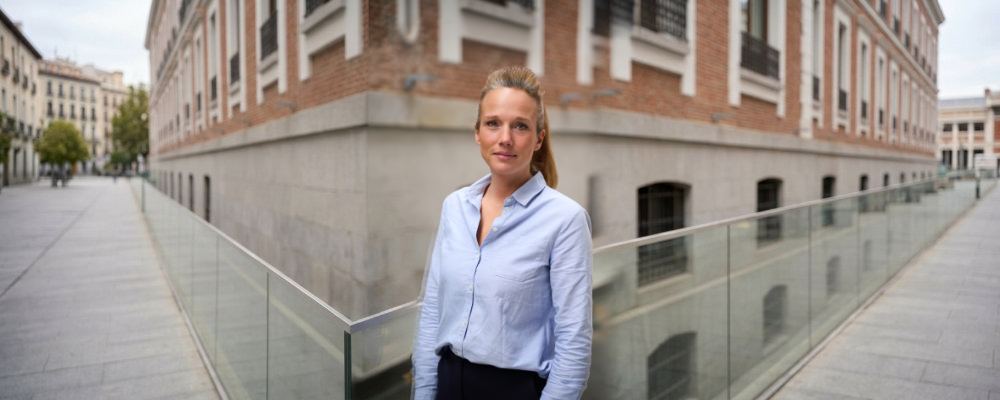
Fanny from The Social Hub: leadership and gaining experience
Fanny van den Dries knew since she was a child she wanted to work in a hotel. That early fascination with the atmosphere, energy and interaction with people grew into a career centred around hospitality, development and leadership. Through roles in tourism, communications, sales and events, she gradually discovered that she is more of a generalist than a specialist.
After holding various roles in the hotel industry, she moved into hotel management and became a General Manager. In 2018, she joined The Student Hotel, now The Social Hub. She was particularly drawn to the combination of hotel guests, extended-stay guests, students and community. For the past four years, she has been Regional Director Operations, responsible for The Social Hub’s eight locations in the Netherlands.
In this interview, Fanny talks about her career, her views on leadership and talent development, the changing expectations of young professionals, and why she believes the future of hospitality is all about flexibility, community and connection.
It all started with one night in a hotel
My love for the hotel industry began when I was about eight years old. We usually stayed at holiday parks when we went away, until one day we stayed in a hotel for the first time. I still remember walking in and immediately saying to my mother, “I want to work in a hotel when I grow up.”
It was mainly the atmosphere that struck me. The energy, the interaction with people and the idea that guests are there to have a good time. That feeling has never really left me. From that moment on, my choices of studies, internships and part-time jobs followed quite naturally.
Practical experience first, then a broader perspective
After completing vocational training in tourism, I did an internship at a hotel. That confirmed that hospitality was the right industry for me. At the same time, I realised that you already learn an incredible amount through hands-on experience in this field. That’s why I consciously wanted to develop my knowledge in another area as well.
I went on to study communications at a university of applied sciences, followed by communication science at university. That taught me above all to look critically at information and consider different perspectives.
I discovered that I’m not a specialist
Through sales, I joined the Meetings & Events department at Hotels van Oranje. I enjoyed the commercial side of the work, but I also realised that I didn’t necessarily get my energy from focusing on all the details. I wanted to understand how everything fitted together.
When I was given the opportunity to become an Assistant Hotel Manager, something clicked. I realised that I’m much more of a generalist than a specialist. That became even clearer later at Amrâth Hotels in Haarlem. My strength lies in maintaining an overview, connecting different disciplines and managing the operation as a whole.
You learn leadership by doing it
When I first became a General Manager, I had already held several different positions and started with a relatively small team. For me, that was a good way to continue developing as a leader.
I still benefit greatly from what I learned during my studies, especially because I work with international teams every day. Intercultural communication is also an area I would like to explore further in the future.
You can learn a lot about leadership through education, but ultimately you have to learn by doing. You encounter situations where you don’t immediately know the right approach. You make mistakes, try something different and gradually discover what works and what doesn’t. Gaining that hands-on experience has been incredibly important to me. It prepared me step by step for the larger leadership roles that came later.
Everything came together at The Social Hub
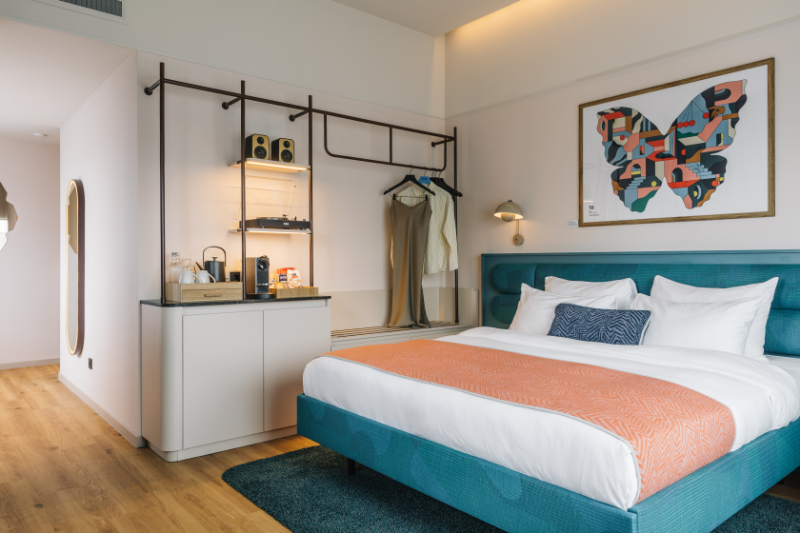
In 2018, I was approached by The Student Hotel, now The Social Hub. What immediately appealed to me was the dynamic nature of the concept. Students, extended-stay guests and hotel guests all stay in the same location and use the same spaces.
That creates something you’re less likely to find in a traditional hotel. People aren’t just there to spend the night; they also come to meet others and become part of a community. In a way, I recognised exactly what had attracted me to hotels as a child: energy, people and connection.
Eight locations, but I still prefer to be close to the operation
I’m now Regional Director Operations, responsible for The Social Hub’s eight locations in the Netherlands.
I mainly support the General Managers in three areas: happy and engaged teams, a strong guest experience, and solid financial and commercial performance. The advantage of having eight locations within one region is that we can learn a lot from each other. We can share knowledge, collaborate and, where necessary, move team members between locations.
I personally spend almost every day at a different hotel. That suits me. I don’t want to look at results from a distance. Being among the teams and guests is where I get the most energy and where I can see what is really happening.
Pressure on hotels requires smarter choices
Rising costs and the increase in VAT are putting pressure on results. That means we have to take a critical look at how we work: where can we make processes smarter, and how can we use people and resources more efficiently?
The labour market also remains a challenge. Young employees look beyond salary and want flexibility, development opportunities and an employer whose values align with their own. That’s why we invest in growth, including through our Talent Recognition Program and training for high-potential employees. By giving people perspective and responsibility, we can retain talent more effectively within our organisation.
A good hotel starts with a good team
For me, good leadership always starts with people. A happy team creates happy guests and, ultimately, a hotel that performs well.
That means continuing to listen to what employees need. Development is part of that, but so is flexibility in working hours and types of contracts. Especially in a changing labour market, you can’t simply continue doing things the way you’ve always done them.
At the same time, I think it’s important for leaders to stay connected to the operation. That’s where it all happens. Not in a spreadsheet or a meeting, but on the floor, with your teams and your guests.
Empathetic with people, clear about expectations
My own leadership style has changed over the years. When I first became a Hotel Manager, my main priority was making sure everyone was happy and felt comfortable. To me, good leadership now means being empathetic with people while remaining clear about expectations. You can be understanding and human while still setting clear expectations. And when those expectations aren’t met, you also need to be willing to have that conversation. I really had to learn that balance through experience.
I learn something from every leader
One important lesson for me was that you also have to show what you have achieved. I’m naturally quite modest about that. But if you don’t talk about what you’ve done or the results you and your team have achieved, other people may not see them either.
All those different lessons, both the things I wanted to adopt and the things I wanted to do differently, have shaped my own approach to leadership.
Technology should make human interaction easier
I expect hotels to combine more and more functions in the coming years. A hotel will no longer just be a place to stay overnight, but also somewhere to live, work, exercise and meet other people. At The Social Hub, we already work from that perspective.
Automation will also play an increasingly important role. For example, we use self check-in kiosks. Not to replace employees, but to give them more time to interact with guests.
If simple processes can be automated, employees need to spend less time behind a screen. That time can instead be spent with guests. To me, that’s exactly what technology in hospitality should achieve: more room for personal attention and genuine connection.
The boundaries between staying, working and meeting are disappearing
I strongly believe in the future of mixed-use hospitality. Guests increasingly want places where different parts of their lives come together.
We see this among our younger guests, for example. A healthy lifestyle is becoming increasingly important, which is why we’ve invested in new, professionally equipped gyms at our locations. They’re used extensively not only by students and extended-stay guests, but also by hotel guests.
The same applies to coworking, events and public spaces. When you combine these intelligently, you don’t just create commercial value. You also create more opportunities for people to meet each other. That’s where community develops.
Passing on my passion feels like one of my greatest achievements
Looking back at my career, I’m especially proud that I’ve continued to follow my passion for hospitality. Perhaps even more rewarding is being able to pass that enthusiasm on to others, including interns and young team members. I want to show them that hospitality can be much more than just a part-time job.
Interacting with guests, giving someone a special experience or seeing people leave with great memories because of your recommendations still gives me a lot of energy. If I can get other people excited about this profession, that makes me incredibly proud.
Leadership comes with experience
My most important advice to young professionals who want to progress to General Manager may not be what they most want to hear: take your time.
I see a generation that is ambitious, learns quickly and often masters new hard skills in a short period of time. But once you start leading people, soft skills, personal leadership and situational leadership become at least as important. Those aren’t things you can learn from a book alone. You need experience, as well as the ability to reflect on yourself and others.
So pay close attention to the leaders around you. What works for you? What doesn’t? And what would you do differently yourself?
I’ve seen plenty of people take a big step very quickly and then struggle with it. If you do what gives you energy, continue developing yourself and build up enough experience, those next steps will come naturally.
My next step is driven by energy, not a career plan
I’ve never had a fully mapped-out career plan. For me, it’s more important to keep doing work that I enjoy and that gives me energy.
One of the things that suits me so well about The Social Hub is that we never settle for the status quo. We’re constantly looking at how we can innovate, improve and make the most of new opportunities. It’s precisely that constant movement that keeps my work interesting.
Would you like to work at The Social Hub at one of their eight locations? Take a look at all their vacancies.