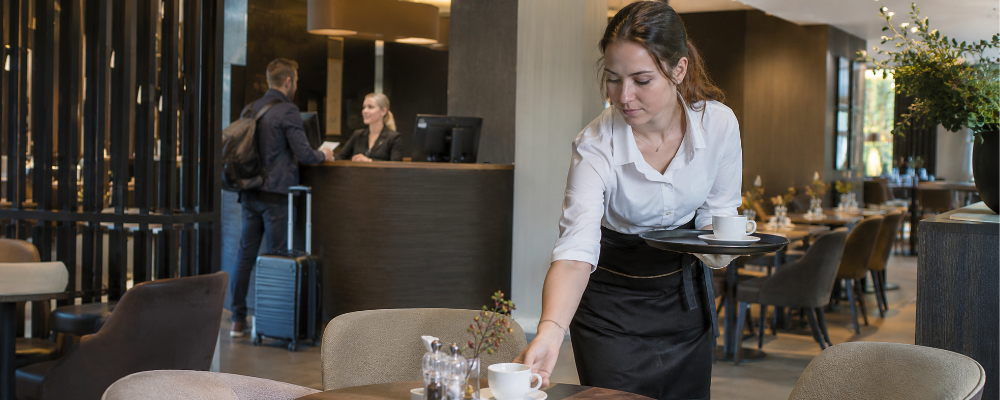
From restaurant and bar work to a hotel: which jobs suit your experience?

Do you work in a restaurant, café, bar or lunchroom and are you considering a job in a hotel? You probably already have skills that are valuable in the hotel industry. These include welcoming guests, working under pressure, collaborating with colleagues and handling unexpected situations.
With restaurant or bar experience, you could work in a hotel restaurant, breakfast service, hotel bar, banqueting department or kitchen. Positions in reception, reservations and guest relations may also be interesting options. Which role suits you depends on your work experience, skills and the requirements of the hotel.
In this article, you will discover which hotel jobs match your hospitality experience, what changes when you move into a hotel environment and how to make the transition.
Which hotel jobs match your hospitality experience?
Moving from a restaurant, café or bar to a hotel does not necessarily mean starting your career from scratch. Many responsibilities are similar, although the working environment and level of responsibility may differ.
Your previous experience | Suitable hotel jobs | Why these roles may suit you |
|---|---|---|
Restaurant service | Food & Beverage employee, restaurant team member, breakfast attendant | You already have experience with guest service, teamwork and handling busy periods. |
Bar or café | Bartender, hotel bar attendant, barista, F&B employee | You understand beverage service, hospitality, payments and independent working. |
Kitchen | Cook, chef de partie, commis chef, breakfast chef | You are familiar with kitchen operations, food safety and working under time pressure. |
Host or hostess | Hotel receptionist, front office agent, guest relations employee | You know how to welcome guests, answer questions and create a positive first impression. |
Reservations and telephone service | Reservations agent, front office agent | You have experience with scheduling, administration and guest communication. |
Catering and events | Banqueting employee, meetings & events team member | You are familiar with group service, preparation and event operations. |
Shift leader or restaurant manager | Restaurant supervisor, F&B supervisor, banqueting supervisor | You have experience supervising colleagues, setting priorities and coordinating daily operations. |
These are possible career options, not automatic progression routes. A hotel may require additional experience, language skills or knowledge of specific systems.
Not sure which role suits your experience? Explore the hotel jobs by position overview to compare different career opportunities.
1. From restaurant service to food and beverage in a hotel
If you have experience working in restaurant service, the Food & Beverage (F&B) department is a logical place to start. This department is responsible for food and drink services within the hotel.
Depending on the hotel, you could work in a restaurant, bar, breakfast room, lounge or room service department.
Which skills can you bring with you?
As a restaurant service employee, you may already be familiar with:
Welcoming guests and showing them to their tables.
Taking orders and serving food and drinks.
Advising guests about menus, ingredients and beverages.
Handling allergies and dietary requirements.
Processing payments.
Preparing tables and completing mise-en-place.
Working closely with kitchen staff and other colleagues.
These responsibilities are also common in hotel restaurants. Hotels may place additional emphasis on personalised service, product knowledge and recognising the preferences of returning guests.
What is different about working in a hotel restaurant?
In a hotel restaurant, you serve not only guests who visit for lunch or dinner but also people staying overnight.
This means you may interact with different types of guests, including international travellers, business guests and holidaymakers.
You also work regularly with other hotel departments. For example, a guest might ask about their room, breakfast arrangements or check-out while having dinner. You do not need to resolve every question yourself, but you should know which colleague or department can help.
If you already have restaurant experience, a position as an F&B employee or restaurant team member could be a suitable next step.
Explore the available waiter jobs or discover opportunities as an F&B employee. If you particularly enjoy welcoming and assisting guests, you may also be interested in hotel hostess positions.
2. From café or bar work to bartender in a hotel
Do you currently work in a café or cocktail bar? Your experience could be useful in a hotel bar, lobby bar or restaurant with its own bar.
Many duties will be familiar. You prepare drinks, advise guests, process payments and make sure the bar is clean, organised and ready for service.
Depending on the type of hotel, additional skills may be important, such as cocktail preparation, wine knowledge, making speciality coffee or following specific service standards.
Which skills are important?
Knowledge of beverages and preparation methods.
Friendly and professional guest communication.
The ability to prepare and close a bar independently.
Staying organised when several guests order at the same time.
Serving alcohol responsibly.
Working with restaurant staff and other hotel departments.
In some hotels, bartenders mainly focus on preparing and serving drinks. Other positions may involve contributing to the drinks menu, managing stock or supporting less experienced colleagues.
Always look beyond the job title and check which responsibilities are included in the position.
Would you like to use your bar experience in a hotel? Browse the available bartender jobs or explore other hotel bar jobs. If your experience is more focused on preparing coffee and advising guests, you could also consider barista jobs.
3. From hospitality to breakfast attendant in a hotel
If you have experience in a lunchroom, coffee shop or restaurant, working as a hotel breakfast attendant could be a good match.
Breakfast is an important part of the stay for many hotel guests. As a breakfast attendant, you help guests start their day with a pleasant dining experience.
What does a breakfast attendant do?
Common responsibilities include:
Preparing the breakfast restaurant before guests arrive.
Welcoming guests and explaining the breakfast service.
Replenishing and maintaining the breakfast buffet.
Preparing coffee, tea and other drinks.
Taking dietary requirements and allergens into account.
Clearing and resetting tables.
Following hygiene and food safety procedures.
Communicating with kitchen and reception staff about special requests.
In smaller hotels, you may also carry out other duties, such as preparing meeting rooms or supporting the restaurant during lunch service.
Is breakfast service suitable if you have restaurant experience?
Yes. Previous experience with guest contact, table service, food preparation and hygiene procedures can be particularly relevant.
Some breakfast positions do not require previous hotel experience. Other employers may expect you to manage a breakfast service independently.
However, working hours are an important consideration. Breakfast attendants often start early because the restaurant needs to be ready before the first guests arrive.
If you prefer mornings to evenings, this could be an interesting career change. Always check the shift schedule, as weekend and public holiday work may still be part of the role.
Explore the available breakfast attendant jobs and compare them with other hotel restaurant jobs to find a position that matches your preferences.
4. From restaurant or catering work to banqueting and events
Do you have experience with catering, group dinners, celebrations or events? A position in banqueting or meetings & events could be a good option.
Banqueting involves organising and providing food and beverage services for events held at a hotel. These may include business meetings, conferences, receptions, dinners and celebrations.
What does working in banqueting involve?
Preparing meeting rooms and event spaces.
Arranging tables, chairs and required equipment.
Welcoming guests attending events.
Providing coffee breaks, lunches, receptions and dinners.
Coordinating with the kitchen, sales team and other departments.
Following event schedules and programmes.
Clearing rooms and preparing them for the next event.
If you are used to staying organised during busy restaurant services, you already have a useful foundation. Event work also requires you to follow schedules carefully and respond quickly when plans change.
Which hospitality experience is relevant?
Experience in catering, restaurant service and events is particularly useful. If you have organised group dinners, supervised colleagues or communicated with event organisers, this may also be relevant for positions with greater responsibility.
There is an important difference between operational banqueting roles and commercial event sales positions. Event sales may require experience preparing quotations, communicating with clients and coordinating bookings.
If you enjoy the operational side of events, explore banqueting employee jobs. For a broader range of roles, browse the banqueting jobs overview. If you already have leadership experience, banqueting supervisor jobs may be worth considering.
5. From restaurant host to hotel receptionist
Would you like to spend less time serving food and drinks while continuing to work directly with guests? A position at a hotel reception desk could be an interesting option.
As a restaurant host or hostess, you already have experience welcoming guests, answering questions and creating a positive first impression. These skills are also important for hotel receptionists.
However, there are differences. Hotel reception work generally involves more administration, reservation systems and coordinating different aspects of a guest's stay.
What are the main responsibilities?
Checking hotel guests in and out.
Checking, processing and modifying reservations.
Answering telephone calls and emails.
Processing payments and invoices.
Providing information about the hotel and local area.
Handling guest requests and complaints.
Coordinating with housekeeping regarding room availability.
Hotels often use a Property Management System (PMS) for these tasks. This software manages reservations, room availability and guest information.
Some receptionist positions require experience with a PMS, while other hotels offer opportunities to learn these systems on the job.
Can you become a hotel receptionist without previous hotel experience?
Yes, it is possible. Restaurant and hospitality experience is relevant, particularly if you are comfortable interacting with guests, working independently and solving problems.
However, some hotels require additional skills, such as good Dutch and English communication, administrative accuracy and experience with reservation software.
Always check the requirements for each position. If you are interested in front desk work, compare the available hotel receptionist jobs. If you already have experience supervising colleagues, you could also explore front office supervisor positions.
6. From hospitality to reservations or guest relations
Not every hotel job involves serving guests or working at a reception desk. Your hospitality experience may also be relevant for positions as a reservations agent or guest relations employee.
Working in reservations
As a reservations agent, you handle bookings, enquiries and administrative processes.
Responsibilities may include:
Taking and modifying reservations.
Answering guest questions by telephone or email.
Recording special requests and guest preferences.
Checking booking details.
Communicating with other hotel departments.
Processing administrative information accurately.
If you have worked with restaurant reservation systems, table planning or group bookings, you already have experience that relates to these responsibilities.
The difference is that hotel reservations often involve additional details, such as room types, arrival and departure dates and specific booking conditions.
If you enjoy administrative work and communicating with guests, explore the available reservations agent jobs.
Working in guest relations
A guest relations employee focuses on providing personalised service and responding to guests' individual needs.
For example, you may prepare special requests, answer questions, follow up on guest feedback and coordinate with different departments to make each stay as comfortable as possible.
Experience as a restaurant host or in a service-focused restaurant can be particularly useful.
Some guest relations positions require additional hotel experience or knowledge of specific service procedures.
If personalised guest service appeals to you, browse the guest relations jobs on Hotelprofessionals.
7. From restaurant kitchen to hotel kitchen
If you currently work as a cook or kitchen assistant in a restaurant, moving into a hotel kitchen could be a logical next step.
You bring knowledge of cooking techniques, mise-en-place, food safety, stock management and working under pressure.
However, the organisation of a hotel kitchen can be different from that of an independent restaurant.
What changes when you work in a hotel kitchen?
Depending on the hotel, the kitchen may be responsible for several services:
Breakfast for hotel guests.
Lunch and dinner in the hotel restaurant.
Room service.
Business lunches and meeting catering.
Group dinners, buffets and events.
This can make the work varied. Some chefs specialise in one kitchen section, while other positions require flexibility across several services.
If you have experience as an independent cook or chef de partie, you can look for comparable positions within hotels.
If you have less experience, positions such as kitchen assistant or commis chef may be worth considering. Qualifications and responsibilities differ between employers.
Explore the available cook jobs. If you already have experience managing a kitchen section, chef de partie jobs may be relevant. For candidates with less experience, there are also commis chef positions.
8. From shift leader or restaurant manager to a hotel supervisory role
Have you already supervised colleagues in a restaurant, café or bar? You may also be able to apply for supervisory positions within hotels.
Examples include restaurant supervisor, F&B supervisor, banqueting supervisor or, depending on your experience, a management position in the Food & Beverage department.
Which leadership experience is relevant?
For supervisory positions, hotels often look for candidates with experience in:
Assigning tasks during shifts.
Training and supporting colleagues.
Leading briefings and shift handovers.
Handling guest complaints independently.
Maintaining service standards.
Setting priorities during busy periods.
Working with other departments.
These are also skills you develop as a restaurant or café shift leader.
In a hotel, you may encounter additional procedures, larger teams and more coordination between departments.
You do not always have to return to an entry-level position. If you already have leadership experience, a supervisory role may match your background. However, the requirements depend on the employer and the responsibilities of the position.
If you have experience leading a restaurant team, explore the restaurant supervisor jobs. If you prefer coordinating events and teams, banqueting supervisor positions may also match your experience.
Which hospitality skills are valuable in a hotel?
When moving into the hotel industry, it is important to look beyond your current job title. Employers also consider the skills you have developed through previous work.
Examples of transferable skills include:
Hospitality: You know how to make guests feel welcome and respond to their needs.
Communication: You can answer questions, explain information clearly and respond professionally to complaints.
Working under pressure: You can stay organised when several tasks require your attention.
Teamwork: You are used to coordinating with colleagues and supporting one another during busy shifts.
Problem-solving: You can respond to unexpected situations and find practical solutions.
Commercial awareness: You may have experience advising guests and recommending additional products or services.
Attention to detail: You may be familiar with payments, reservations, allergens or administrative checks.
Flexibility: You are comfortable combining different responsibilities and working changing shifts.
The most important skills depend on the hotel position. Reception work, for example, places greater emphasis on communication and administration, while kitchen positions require technical cooking skills and knowledge of food safety.
Do you need a hotel qualification to move from restaurant work to a hotel?
Not for every position. For some operational hotel jobs, relevant experience in restaurants, bars or other hospitality businesses may be sufficient.
This can apply to certain roles in restaurant service, breakfast service, bars and other guest-facing departments.
Specialised or supervisory positions may have additional requirements, such as relevant qualifications, knowledge of hotel software, previous leadership experience or specific technical skills.
Language skills are also important. Hotels often welcome international guests, so many guest-facing positions require good English communication skills. Some employers also require Dutch.
Always check the requirements listed in the job description. Not having a hotel qualification does not automatically make you unsuitable, but hospitality experience does not replace every required qualification.
What is the difference between working in a restaurant and working in a hotel?
Hotels are part of the wider hospitality industry, but their working environment can be different from that of an independent restaurant or café.
One important difference is that hotel guests often stay for several days. As a result, you may interact with the same guests at different moments during their stay.
Hotels also have several departments working together, including front office, housekeeping, Food & Beverage, reservations and meetings & events.
In a restaurant, the focus is mainly on the guest's experience during a particular visit. In a hotel, different departments contribute to the entire guest stay.
Are the working hours different?
That depends on the position and the hotel.
Hotel restaurants and bars often require evening and weekend shifts. Breakfast employees usually start early in the morning. Receptionists may work rotating shifts, and some hotels employ dedicated night receptionists.
Hotels also have positions in departments such as reservations and sales, where working hours may be organised differently from restaurant shifts.
If you want to change jobs because you are looking for different working hours, compare more than just the job title. Pay attention to shift schedules, contracted hours and expectations regarding weekend and public holiday work.
How do you move from restaurant or bar work to a hotel job?
The first step is deciding which parts of your current job you would like to continue doing and what you would prefer to change.
Step 1: identify the experience you want to use
Make a list of the responsibilities you already have experience with. These might include guest interaction, restaurant service, reservations, kitchen work, events or supporting colleagues.
Then look for hotel positions where these skills are relevant.
Step 2: compare different job titles
Hotels do not always use the same job titles. It is therefore useful to search for several related positions rather than just one.
For example, if you have experience as a restaurant host, consider hotel receptionist, front office agent and guest relations employee positions.
If you have worked in restaurant service, compare jobs such as restaurant team member, F&B employee, breakfast attendant and banqueting employee.
You can use the hotel jobs by position overview to compare different career options.
Step 3: identify any skills you still need to develop
Some hotel positions require additional knowledge. For front office work, this may include experience with a Property Management System. In a hotel bar, specific cocktail or beverage knowledge may be important.
Check whether the hotel offers training or guidance and whether you meet the main job requirements.
Step 4: explain your hospitality experience clearly on your CV
Instead of simply stating that you have worked in hospitality, describe the responsibilities you have handled.
For example:
Welcomed guests daily and handled questions or complaints.
Managed reservations and processed payments independently.
Trained and supported new colleagues.
Helped organise and deliver group dinners.
Worked with kitchen staff to handle dietary requirements and allergies correctly.
Only include examples that accurately reflect your own experience.
Step 5: search for suitable hotel vacancies
Compare several positions and look beyond their titles. Review the responsibilities, experience requirements, working hours and development opportunities.
On Hotelprofessionals, you can explore hotel jobs that match your background and interests.
Frequently asked questions about moving from restaurant work to hotel jobs
Can I work in a hotel with restaurant or bar experience?
Yes. Experience in restaurants, cafés, bars and catering can be relevant for many hotel jobs. These include restaurant service, Food & Beverage, breakfast service, banqueting, kitchen work and some front office positions. Which roles are suitable depends on your experience and the employer's requirements.
Which hotel jobs are suitable if I have waiting staff experience?
With restaurant service experience, you could consider positions as a restaurant team member, F&B employee, breakfast attendant, banqueting employee or room service employee. If you also have experience welcoming guests or managing reservations, front office jobs may be worth exploring.
Can I move from restaurant work to hotel reception?
Yes. Experience in guest service, communication and problem-solving is particularly relevant. However, reception work may also require reservation system knowledge, administrative skills and specific language abilities.
Can I become a hotel supervisor with restaurant experience?
That depends on your previous responsibilities. If you have experience supervising colleagues, coordinating shifts and resolving guest complaints, a supervisory position may suit your background. Some hotels also require specific hotel experience.
Do I need a hotel qualification if I already work in hospitality?
Not always. For certain positions, relevant work experience may be sufficient. Other roles require specific qualifications, technical knowledge or experience with hotel systems. Always check the individual job requirements.
Which hotel job is suitable if I want to work fewer evenings?
That depends on the position. Breakfast attendants often work early shifts, while some reservations and administrative roles may have different working hours. Always check the schedule and employment conditions, as weekend work may still be required.
Is working in a hotel very different from working in a restaurant?
Many skills are transferable, especially hospitality, guest service and teamwork. In hotels, you may work with more departments and interact with guests staying for several days. The differences depend on the position and type of hotel.
Find a hotel job that matches your hospitality experience
There are several ways to move from restaurant or bar work into the hotel industry. You can build on your experience in restaurant service, bars or kitchens, or explore a different direction, such as reception, reservations, guest relations or events.
You do not always have to start from scratch. The skills you have developed in hospitality can be valuable in a hotel. The key is to choose a position that matches your existing abilities and what you would like to learn next.
Compare hotel restaurant jobs, bar jobs, banqueting jobs and receptionist vacancies. Or browse all hotel jobs in the Netherlands on Hotelprofessionals.